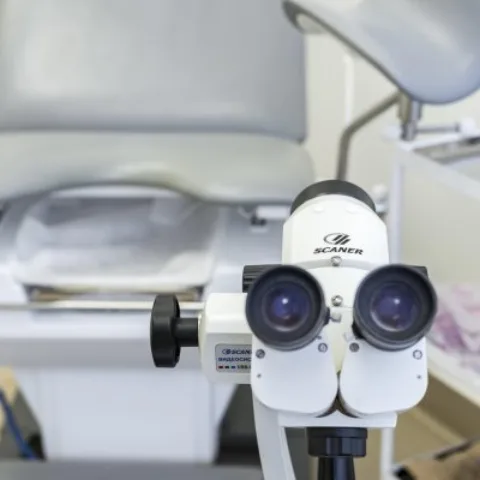

Colposcopy is an examination of the cervix, vagina and vulva with a special optical device (a colposcope) at 10–40× magnification. The colposcope works like a camera looking closely at the cervix, revealing small changes that cannot be seen during a routine gynecological exam. At our clinic it is performed with a Carl Zeiss colposcope.
Why is colposcopy needed?
Cervical cancer often develops over years without any symptoms. Its main cause is the human papillomavirus (HPV). Colposcopy helps detect precancerous changes (dysplasia, CIN) at an early stage, when they can be fully treated.
When is colposcopy recommended?
- after an abnormal Pap smear (cytology) result;
- when high-risk HPV types are detected;
- when cervical erosion, a patch or a suspicious area is seen during an exam;
- with bleeding after intercourse or between periods;
- with genital condylomas and papillomas;
- for follow-up after treatment of the cervix;
- as a preventive exam when planning pregnancy — as part of a gynecological check-up.
How is it done?
You lie on the gynecological chair, the doctor opens the cervix with a speculum and examines it under the colposcope. The cervix is then treated with special solutions (acetic acid and Lugol's iodine): healthy and changed tissue react differently, so suspicious areas become clearly visible. If needed, a small tissue sample (biopsy) is taken. The examination takes 10–15 minutes and is painless — at most there may be mild discomfort.
How to prepare for colposcopy
- it is done in the first days after your period ends (before mid-cycle);
- avoid intercourse, vaginal suppositories, creams and douching for 1–2 days before;
- if there is acute inflammation, the infection is treated first.
What happens after the result?
The result is explained right after the examination. If there are no changes, routine preventive follow-up continues. Mild changes may be monitored or treated, while for erosion and papillomas laser treatment or laser papilloma removal may be recommended. The doctor will also advise you on HPV vaccination.
Can colposcopy be done during pregnancy?
Yes, colposcopy is safe in pregnancy and, when indicated, is done as part of pregnancy care. A biopsy is taken only when there is a serious indication.
Read more: What is a colposcopy and how is it done? and What is colposcopy and why is it needed?
Treatment stages
- Consultation
Symptoms and Pap smear and HPV test results are discussed.
- Colposcopic examination
The cervix is examined under magnification with a Carl Zeiss colposcope.
- Special tests
Acetic acid and Lugol's iodine tests, with a biopsy if needed.
- Result and plan
The result is explained right away and a follow-up or treatment plan is given.
Questions about this service
Is colposcopy painful?
How long does colposcopy take?
How is colposcopy different from a Pap smear?
What should I keep in mind after colposcopy?
Have a question?
Book an appointment or message on WhatsApp — we will choose the right treatment together.
Related articles

What is a colposcopy and how is it done?
A colposcopy is a simple, painless examination that lets the doctor look closely at the cervix under magnification. Here is when it is needed, how to prepare and what happens during the procedure.