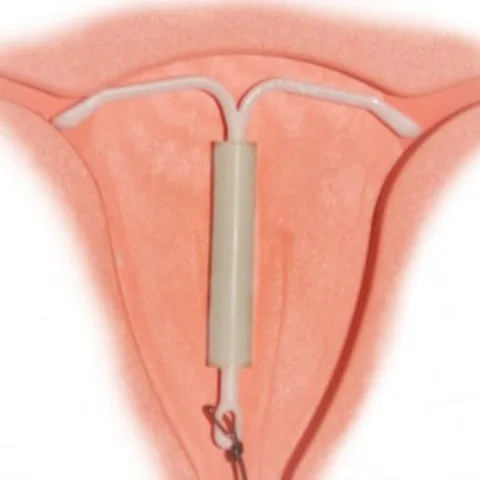
The IUD is one of the most reliable long-acting methods of contraception. Learn about the types, who they suit, how insertion works and what to expect afterwards.
An intrauterine device (IUD) is a small T-shaped device placed inside the uterus. Once inserted, it protects against pregnancy for several years with an effectiveness of more than 99%. There are no daily pills to remember, it can be removed at any time, and fertility returns quickly after removal.
Types of IUD
Copper IUD (hormone-free)
A thin copper wire is wound around a plastic frame. Copper hinders sperm movement and fertilisation of the egg. It contains no hormones and, depending on the model, can be used for 5–10 years. Some women notice slightly heavier and more painful periods during the first months.
Hormonal IUD
It releases a small amount of the hormone levonorgestrel into the uterus. This thickens cervical mucus and thins the uterine lining. Depending on the model, it works for 3–8 years. Periods often become lighter and less painful, so it may also be recommended for women with heavy, painful periods.
Who is an IUD suitable for?
- women who want long-term, reliable protection;
- women who have and have not given birth (the size is chosen by the doctor);
- those who forget to take pills or cannot use estrogen-containing pills;
- mothers after childbirth, including while breastfeeding.
When is an IUD not inserted?
- pregnancy or suspected pregnancy;
- acute pelvic inflammation or an active sexually transmitted infection;
- uterine bleeding of unknown cause;
- uterine or cervical cancer;
- anomalies or large fibroids that distort the uterine cavity;
- for the copper IUD — copper allergy and Wilson's disease.
Which IUD suits you can only be decided by the doctor after an examination.
When is an IUD inserted?
If pregnancy has been ruled out, an IUD can be inserted on any day of the cycle. The last days of a period are often chosen, as the cervix is slightly open and the procedure is more comfortable. After childbirth, an IUD is usually inserted no earlier than 6 weeks later.
Which tests are needed before insertion?
- a gynecological examination;
- a vaginal swab and, if needed, tests for infections;
- a pelvic ultrasound;
- a Pap test if one has not been done recently.
How is an IUD inserted?
The procedure is done on the gynecological chair and usually takes 5–10 minutes. The doctor cleans the cervix with an antiseptic, measures the length of the uterus and places the IUD through a thin inserter tube. The fine threads that hang into the vagina are trimmed. A brief cramp similar to period pain may be felt; pain relief is used if needed.
After insertion
- mild cramps and light spotting in the first days are normal;
- avoid intercourse, baths, swimming pools and tampons for a few days;
- a check-up with ultrasound is needed after 4–6 weeks to confirm the IUD's position;
- after that, a yearly gynecological check-up is enough.
See a doctor urgently if you have: severe or worsening lower abdominal pain, a high temperature, foul-smelling discharge, heavy bleeding, you cannot feel the threads, or you suspect pregnancy.
Common myths about IUDs
"An IUD causes infertility." No. After removal, the ability to conceive usually returns within the first cycles.
"IUDs are not for women who have not given birth." They can be — the size and model are chosen individually.
"An IUD can be felt during intercourse." A correctly placed IUD sits inside the uterus and cannot be felt.
Cost of IUD insertion
The cost depends on the type (copper or hormonal), the model and the tests needed beforehand. To find out the exact price and choose the right option, book an appointment or message us on WhatsApp.
Frequently asked questions
Is IUD insertion painful?
Most women feel only a brief cramp similar to period pain. The procedure takes a few minutes.
When does an IUD start working?
A copper IUD protects immediately. A hormonal IUD works immediately if inserted during the first 7 days of a period; otherwise it takes 7 days, and extra protection is advised during that time.
Does an IUD protect against sexually transmitted infections?
No. Only condoms protect against infections.

Surgeon obstetrician-gynecologist, PhD in medicine. Trained in France, member of the European Society for Gynaecological Endoscopy.
Have a question?
Book an appointment or message on WhatsApp — we will choose the right treatment together.